
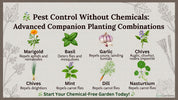
 Pest Control Without Chemicals: Advanced Companion Planting Combinations
  In the world of organic gardening, effective pest control without chemicals is not only possible but also highly rewarding. Companion planting, a key technique in sustainable gardening, involves strategically pairing plants to create natural pest repellents, attract beneficial insects, and foster a balanced ecosystem. This approach minimizes the need for synthetic pesticides, promotes biodiversity, and enhances soil health. For gardeners seeking advanced companion planting strategies, these combinations go beyond basics, drawing on proven methods to tackle common pests like aphids, cabbage worms, and beetles. Whether you're in a small backyard or a community plot, these natural pest control methods can transform your garden into a resilient haven.
 Understanding Companion Planting for Pest Management
Companion planting leverages the natural properties of plants—scents, chemicals, and growth habits—to deter pests or lure predators. Advanced setups often form "plant guilds," where multiple species work together for mutual benefit. Key benefits include reduced pest populations, improved pollination by attracting bees and butterflies, and enriched soil through nitrogen-fixing or dynamic accumulators. Always consider your USDA zone and local climate; these combos are versatile for zones 3–10 but adapt spacing for airflow in humid areas to prevent fungal issues.
 Nasturtium + Brassicas (Cabbage, Broccoli, Kale)
Nasturtium is a powerhouse trap crop in advanced companion planting. Its peppery leaves and flowers draw aphids, cabbage worms, and flea beetles away from brassicas, acting as a sacrificial plant. Plant nasturtium seeds directly around brassica beds in spring, spacing 12 inches apart in full sun with well-drained soil. Care: Water moderately; nasturtiums thrive in poor soil but benefit from occasional compost tea. For feeding, use a low-nitrogen organic fertilizer like bone meal to encourage blooms. This combo attracts hoverflies (aphid predators), boosting natural pest control. No need to pick nasturtium seedlings—direct sow for best results.
 Marigold + Tomatoes + Basil
French marigolds (Tagetes patula) release root exudates that repel nematodes and whiteflies, making them essential in tomato guilds. Basil enhances tomato flavor while deterring hornworms and mosquitoes with its strong aroma. Sow marigold and basil seeds indoors 6–8 weeks before last frost, transplant around tomatoes in full sun, rich soil. Care: Mulch to retain moisture; pinch basil tops for bushiness. Feed with potassium-rich amendments like banana peel tea (gardener favorite for fruiting) or comfrey liquid fertilizer every 4 weeks. Pick seedlings when they have 2–3 true leaves, about 3 weeks after germination. This trio creates a aromatic barrier, promoting vigorous growth.
 Garlic / Chives + Roses / Carrots
Alliums like garlic and chives emit sulfur compounds that repel aphids, carrot flies, and rose chafers naturally. In advanced setups, interplant them with roses for black spot prevention or carrots to mask scents. Plant garlic cloves in fall (6 inches deep) or chive seeds in spring, in sunny, fertile soil. Care: Keep soil moist but not waterlogged; divide clumps every 3 years. Fertilize with fish emulsion (high in nitrogen, per internet gardener reviews) or aged manure in spring for bulb development. No picking needed for chives/garlic starts—they grow directly. This combination also attracts beneficial wasps, enhancing overall pest management.
 Dill + Cabbage Family + Cucumbers
Dill is a star in attracting parasitic wasps and ladybugs that prey on cabbage worms and cucumber beetles. In plant guilds, it acts as an umbrella herb, providing shade and habitat. Sow dill seeds directly in spring, spacing 12 inches in full sun, loamy soil. Care: Water consistently; stake tall stems in windy areas. Feed with seaweed extract (rich in micronutrients, favored by organic gardeners online) every 2–3 weeks to boost flowering. Pick dill seedlings at 2–4 inches if overcrowded, about 2 weeks post-germination. This advanced trio improves pollination and deters pests through biodiversity.
 Radish + Squash / Cucumbers
Radishes serve as a quick trap crop, luring flea beetles and squash bugs away from vining crops. In permaculture designs, they fill space early while squash matures. Direct-sow radish seeds 2–4 weeks before squash/cucumbers in full sun, fertile soil. Care: Thin to 2 inches apart; harvest promptly to avoid bitterness. Use blood meal (nitrogen boost, recommended by forums for root crops) or compost tea biweekly. No picking—radishes are direct-sown. This combo loosens soil for vines and provides early harvests.
 Yarrow + Any Crop
Yarrow is a dynamic accumulator in advanced companion planting, drawing predatory insects like lacewings and hoverflies to control aphids and caterpillars. Its fern-like foliage and white/pink umbels fit any guild. Sow seeds indoors in late winter or direct in spring, in poor, dry soil with full sun. Care: Cut back after blooming for rebloom; it's drought-tolerant. Fertilize sparingly with rock phosphate (phosphorus source, per gardener experiences) in spring. Pick seedlings at 2–3 true leaves, 3–4 weeks after sprout. Yarrow enhances soil fertility by mining minerals.
Catnip / Mint + Brassicas / EggplantCatnip and mint repel flea beetles and ants with their strong volatiles, making them ideal guardians for eggplant and brassicas. Plant in containers to control spread, in partial shade with moist soil. Care: Prune regularly; harvest leaves for tea. Feed with worm castings (microbe-rich, top choice from online communities) monthly. No picking for starts—use divisions. This aromatic barrier also deters deer.
 Onions / Leeks + Carrots / Beets
The classic onion-carrot guild confuses flies with mingled scents, protecting roots from maggots. Leeks extend this to beets. Plant onion sets or leek seeds in early spring, full sun, loamy soil. Care: Hill soil around leeks; mulch for moisture. Use bone meal (phosphorus-calcium mix, gardener staple) at planting. Pick leek/onion seedlings when pencil-thick, 4–6 weeks post-germ. Boosts overall root crop health.
 Calendula + Lettuce / Spinach
Calendula traps aphids and attracts hoverflies for lettuce/spinach protection. Its petals are edible too. Direct-sow in spring, full sun, average soil. Care: Deadhead for continuous blooms; self-seeds. Fertilize with fish hydrolysate (nutrient-dense, favored in forums) every 3 weeks. No picking—direct sow. Adds color and pest control.
 Buckwheat + Any Crop
Buckwheat is a fast cover crop that traps pests and attracts predators when flowering. Sow densely, mow after 4–6 weeks. Full sun, any soil. Care: Quick cycle; till under as green manure. No fertilizer needed—it's a soil improver. No picking—broadcast sow. Ideal for rotation in guilds.These advanced companion planting strategies offer chemical-free pest control, drawing on gardener wisdom from forums like Reddit and GardenWeb. Experiment and observe—your garden will thank you!Shop companion seeds at planthush.com!
#CompanionPlanting #NaturalPestControl #OrganicGardening #PlantGuilds #SustainableGarden #PestRepellentPlants #BeneficialInsects #GardenTips #NoChemicals #PollinatorGarden #Garden2026 #EcoFriendlyGarden #AdvancedGardening #BiodiversityGarden
- Compartir en:
- Deel
- Tweet
- Póngale un alfiler.
- Messenger
- Correo electrónico
Entradas de blog
-

Winter Garden Care
-

What to Start Growing or Planting in February
-

Top 10 Flowers to Start Indoors in February for USDA Zones 3–5


